
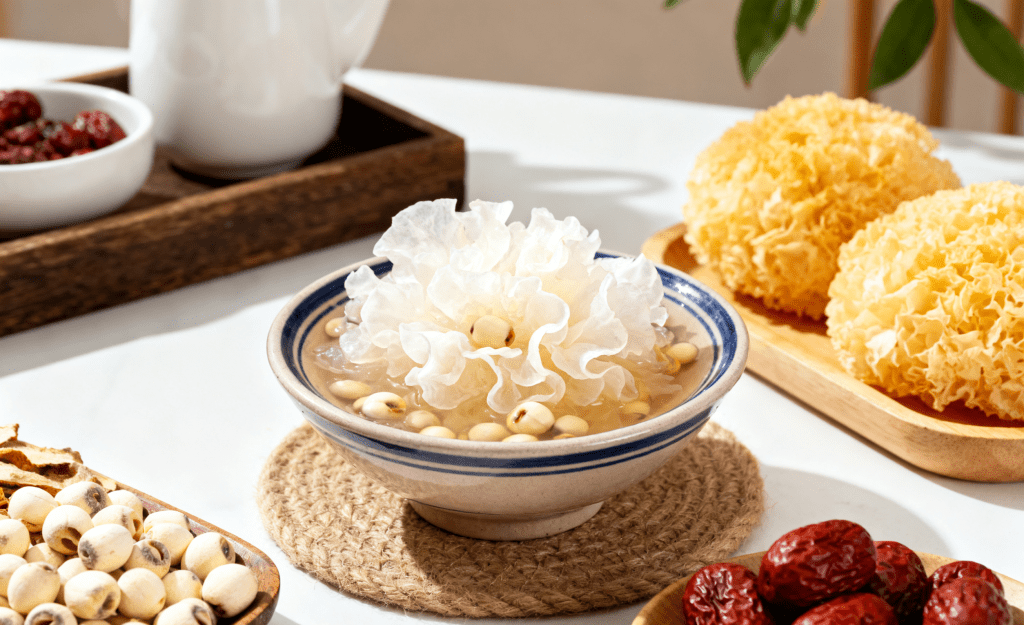
Tremella: A Yin-Nourishing Treasure Across Millennia
In Chinese dietary nourishment culture, tremella has always occupied a special position. This fungus, shaped like a white chrysanthemum, with its gelatinous
texture and mild nature, has been a nourishing choice for millennia. This article explores tremella’s nourishing value and cooking methods to unlock this
delicious treasure in daily meals.
Tremella, also known as snow fungus, looks like a white jade chrysanthemum when fresh. When dried, it shrinks into pale yellow crisp slices. Its growth is
extremely demanding on the environment.
It requires a warm and humid mountain climate and grows on decayed broad-leaved tree trunks. In ancient times, due to scarce output, it was an exclusive tonic
for the royal family. Now with mature artificial cultivation technology, tremella has entered ordinary households and become a common dish on the table.
The nourishing value of tremella has long been recognized by the ancients. “Bencao Shijie Yaoxing” records that it “moistens the lungs and nourishes yin”.
Modern nutrition also confirms that tremella is rich in natural plant gelatin, dietary fiber and various amino acids.
These components can not only replenish moisture for the skin, but also its dietary fiber can promote intestinal peristalsis, especially suitable for consumption
in dry seasons.
How to cook tremella?
Tremella has various cooking methods, the most classic being tremella and lotus seed soup. Soak the dried tremella until fully stretched, tear into small pieces,
boil with pitted lotus seeds.
Add a little rock sugar and simmer for an hour. The soup will be thick and full of gelatin. It is a refreshing dessert for relieving summer heat when chilled.
Besides soup, tremella can also be stir-fried with lily and celery.
The texture combines crispness and tenderness, fresh and delicious.
The key to cooking tremella lies in soaking and heat control. Dried tremella needs to be soaked in cold or warm water for two hours until fully stretched without
hard cores.
Remove the yellow base after soaking to reduce astringency. When stewing, bring to a boil on high heat first, then turn to low heat and simmer slowly. No starch
is needed, as tremella’s own gelatin will be released gradually.
Matching with red dates and wolfberries can enhance fragrance, and boiling with snow pear can further boost lung-moistening effect.
Today, tremella is no longer just a tonic, but also a symbol of healthy eating. Whether it is a bowl of tremella porridge for breakfast or a tremella dessert for
afternoon tea, it can bring mild nourishment to a busy life.
This “white treasure” with a history of thousands of years continues to convey the wisdom of dietary nourishment in daily life with its gentle nature.