
Introduction
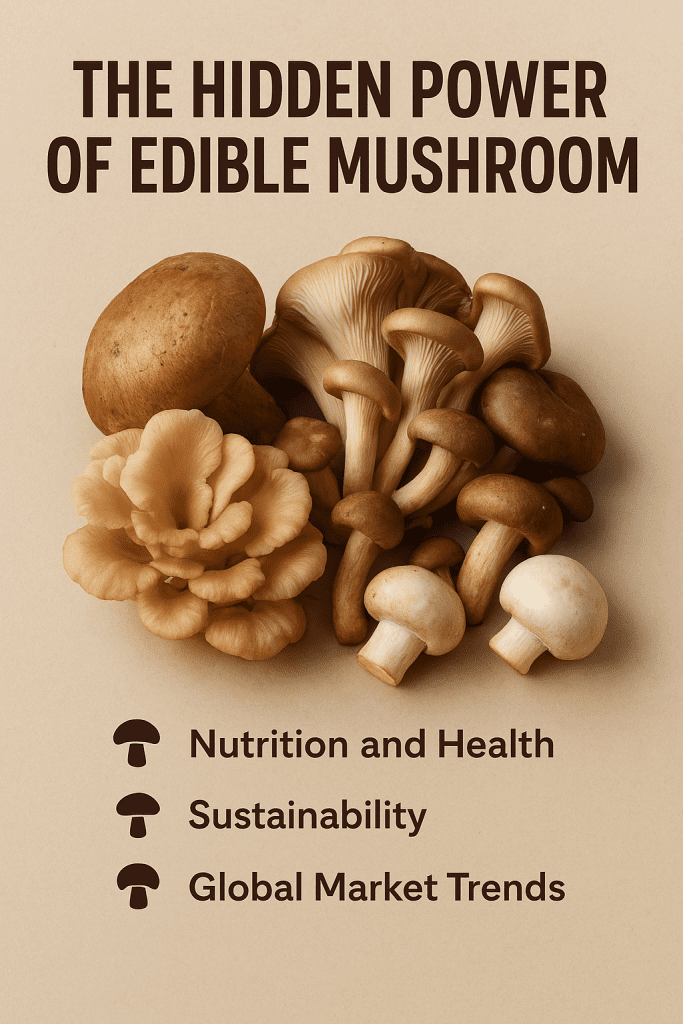
Edible mushrooms have been a vital part of human diets for thousands of years. Beyond their unique taste and texture, they are now recognized as one of the most promising foods for both nutrition and sustainability. From forest foraging to modern biotechnology, edible mushrooms play a crucial role in shaping the future of healthy, eco-friendly living.
🌿 Nutritional Excellence of Edible Mushrooms
Mushrooms are often called “the meat of the forest” — and for good reason. They are low in calories but rich in protein, fiber, antioxidants, and essential minerals such as selenium, zinc, and potassium.
Most varieties, such as shiitake, oyster, and enoki mushrooms, are also high in beta-glucans, natural polysaccharides that support immune health and lower cholesterol levels.
In addition, mushrooms are one of the few plant-based sources of vitamin D, which helps strengthen bones and supports overall metabolic health.
🔬 Mushrooms and Modern Science
Recent studies have uncovered impressive functional properties in edible mushrooms. Some species contain bioactive compounds that exhibit anti-inflammatory, antibacterial, and even anticancer potential.
For instance:
- Lion’s Mane (Hericium erinaceus) promotes nerve regeneration and cognitive function.
- Reishi (Ganoderma lucidum) supports immunity and reduces oxidative stress.
- Cordyceps militaris enhances energy and respiratory function naturally.
These findings have made edible mushrooms a popular ingredient in nutraceuticals, supplements, and functional foods worldwide.
🌏 Sustainability and Environmental Benefits
Growing edible mushrooms is one of the most sustainable agricultural practices on Earth. They can be cultivated using agricultural waste — such as sawdust, corn husks, and coffee grounds — turning organic byproducts into valuable food.
Mushroom farming requires minimal land and water, produces almost no carbon emissions, and contributes to the circular economy by recycling organic material.
By adopting mushroom cultivation, communities can improve food security and reduce agricultural pollution at the same time.
🔗 External Link Suggestion:
Learn more about sustainable mushroom farming on FAO: The Role of Mushrooms in Circular Agriculture.
🧠 The Global Edible Mushroom Market
The worldwide demand for edible mushrooms is expanding rapidly. Consumers are increasingly choosing plant-based and organic options, driving growth in both fresh and processed mushroom sectors.
According to market research, the global edible mushroom market is expected to exceed USD 100 billion by 2030, led by rising health awareness and vegetarian lifestyles.
Major exporting countries such as China, Poland, and the Netherlands continue to innovate in mushroom cultivation technologies — from automated climate control systems to biodegradable packaging.
🔗 Internal Link Suggestion:
Discover how our company supports global healthy food trends in our Organic Product Line.
🍽️ Culinary Versatility and Global Appeal
From Asian soups to European sauces, mushrooms are among the most versatile ingredients in the kitchen. Their umami flavor enhances both vegetarian and meat-based dishes.
Popular culinary uses include:
- Grilled shiitake for a smoky, meaty flavor
- Creamy mushroom soup for comfort meals
- Fermented mushroom extracts in sauces and beverages
Chefs worldwide are now exploring new ways to use mushrooms in plant-based cuisine, combining taste with nutrition.
💡 Innovation in Mushroom Processing
The future of edible mushrooms extends far beyond fresh produce. Advances in fermentation technology and freeze-drying allow mushroom nutrients to be preserved in powder, capsule, or beverage form.
Companies are also developing mushroom-based leather alternatives and biodegradable packaging materials, showcasing the vast potential of fungal biotechnology.
These innovations highlight how mushrooms are not just food — they’re a sustainable resource for the bioeconomy of the future.
🌱 Conclusion
Edible mushrooms represent the intersection of nutrition, sustainability, and innovation. They nourish our bodies, protect the environment, and open new frontiers in food science.
As global demand continues to grow, investing in mushroom cultivation and processing offers both economic opportunity and ecological value.
From the forest to the table — and even into the laboratory — mushrooms remind us that nature already provides everything we need for a healthy and sustainable future.